Customer Intelligence: Turning Data Into Revenue
Learn how enterprise organizations leverage customer data to drive revenue growth, retention, and expansion.
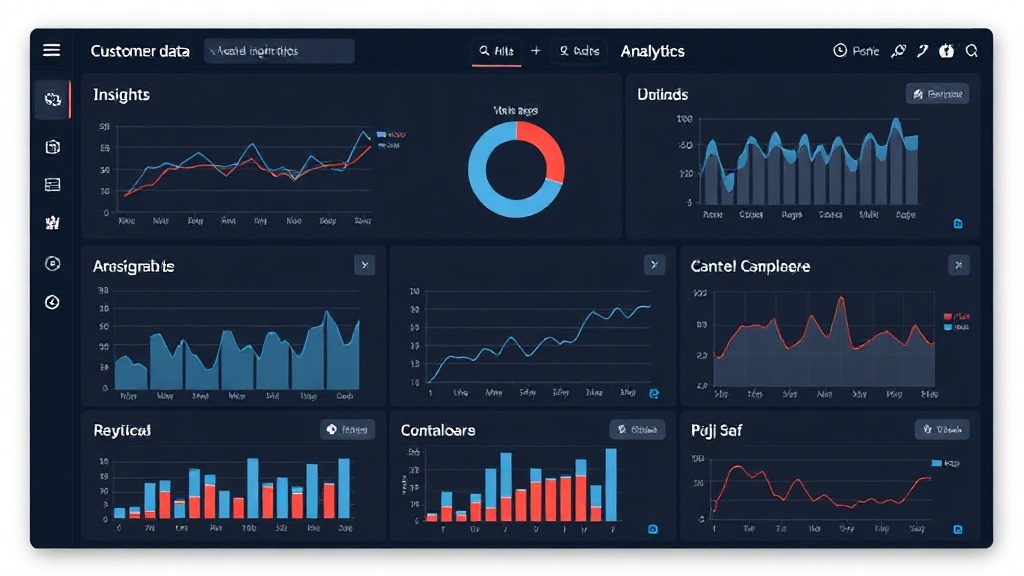
Every customer interaction generates data. Most organizations collect it; top performers transform it into competitive advantage and revenue.
The Intelligence Hierarchy
Level 1: Descriptive Intelligence
What happened?
- Customer demographics, firmographics, technographics
- Historical transaction data
- Support ticket history
- Engagement metrics
This is the baseline. All organizations operate here, but descriptive intelligence alone isn’t actionable.
Level 2: Predictive Intelligence
What will happen?
- Which customers are at risk of churn?
- Which expansion opportunities are likely to close?
- Which new prospects will become high-value customers?
- What is the probability of deal success?
Predictive models use historical patterns to forecast future outcomes. Organizations here compete on speed and insight quality.
Level 3: Prescriptive Intelligence
What should we do about it?
- For at-risk customers: Which intervention prevents churn?
- For expansion opportunities: What is the optimal upsell sequence?
- For new prospects: What messaging resonates most?
- For sales cycles: What should be our next action?
Prescriptive intelligence directly drives action and revenue.
Building Your Intelligence Stack
Data Foundation
Start with comprehensive data integration:
- CRM data: All customer interactions, deal history, engagement
- Product/usage data: Feature adoption, usage frequency, engagement depth
- Financial data: Contract value, expansion history, payment patterns
- Support data: Issue resolution time, satisfaction scores, support channel preference
- Market data: Firmographic changes, competitive activity, market news
Most organizations have this data scattered across 5-10 systems. Unifying it is the first step.
Customer Health Scoring
Create a composite health score combining:
- Usage trends (up, stable, declining)
- Feature adoption breadth
- Support ticket volume and resolution
- Contract renewal timeline
- Executive engagement level
Formula: Higher usage + Higher feature adoption + Lower support friction + Recent exec engagement = Healthy customer
Health scores enable proactive management instead of reactive firefighting.
Churn Prediction
Identify at-risk customers before they leave:
Churn indicators:
- Usage declining 40%+ quarter-over-quarter
- Feature adoption narrowing
- Support tickets increasing
- Engagement declining (meeting RSVPs down, email opens declining)
- Renewal discussion delayed >90 days past standard
Organizations with strong churn prediction models save 10-15% of at-risk revenue through proactive interventions.
Expansion Opportunity Scoring
Which customers are ready to expand? Combine:
- Current contract value (baseline for expansion potential)
- Feature adoption breadth (signals product stickiness)
- Usage intensity (signals need for additional products)
- Team growth (larger team = larger investment capacity)
- Budget cycle alignment (budget available now?)
Top performers identify and close 40-60% more expansion revenue than market average.
Revenue Intelligence Applications
Sales Applications
- Lead scoring: Prioritize 20% of prospects that represent 80% of pipeline probability
- Account strategy: Territory mapping based on revenue potential
- Competitive insights: Win/loss analysis that identifies gaps
- Opportunity scoring: Focus on high-probability deals
Impact: 25-35% improvement in sales productivity
Marketing Applications
- Campaign targeting: Message the right prospect at the right time
- Content effectiveness: Which content moves opportunities forward?
- Channel optimization: Where do highest-value customers come from?
- Attribution clarity: Which touchpoints drive decisions?
Impact: 40-60% improvement in marketing efficiency
Customer Success Applications
- Proactive outreach: Prevent churn before it happens
- Expansion identification: Opportunity scoring at accounts
- Segment strategy: Tailor playbooks by customer segment/risk
- Escalation routing: Route issues to maximize resolution
Impact: 15-25% improvement in retention and expansion revenue
Implementation Roadmap
Month 1-2: Audit & Integration
- Inventory all data sources
- Plan integration architecture
- Define success metrics
Month 3-4: Foundation Building
- Integrate core data systems
- Build baseline customer health score
- Establish data governance
Month 5-6: Predictive Models
- Build churn prediction model
- Create expansion opportunity score
- Validate model accuracy
Month 7-12: Application & Optimization
- Deploy to sales, marketing, CS
- Measure revenue impact
- Iterate and refine models
The Revenue Impact
Organizations with mature customer intelligence systems see:
- 20-30% improvement in retention (churn prevention)
- 25-35% improvement in expansion revenue
- 30-40% improvement in sales efficiency
- 40-50% improvement in marketing ROI
The data is already there. The question is: Are you organized to act on it?
Let’s build your customer intelligence capability.
About This Article
This article is part of Grupo Cidelo's enterprise consulting insights series. We help organizations navigate complex transformations across business automation, enterprise sales, cloud infrastructure, and digital transformation.